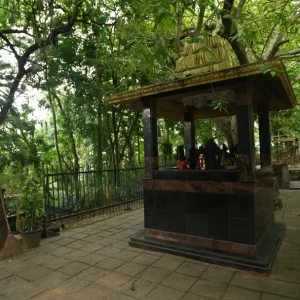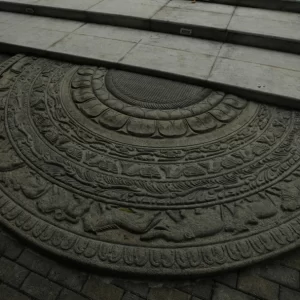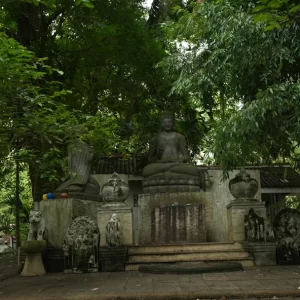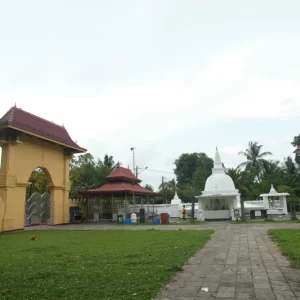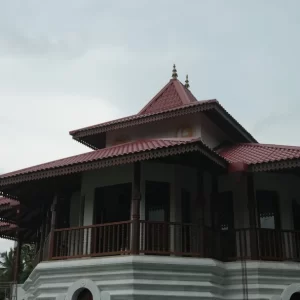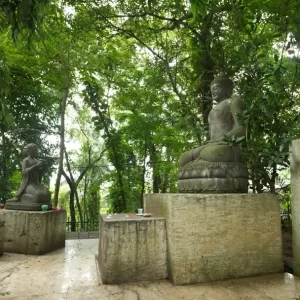



The history of Kotte Raja Maha Vihara dates back to the Kingdom of Kotte as described by the poetic literature (Sandesha Kavya) during the golden era of literature in the 15th Century. During the reign of King Parakramabahu VI (1415–1467), the construction of the temple was begun and completed in all aspects with the royal patronage. There was a monastery at this location during the Kotte Period, but only a few stone pillars remain today. The temple features paintings from the early British
period, including one of Queen Victoria, along with other British influences. In 1887, the temple received a donation from the British Government to commemorate Queen Victoria's Diamond Jubilee, and the modernizing of the paintings leading to the image house with a statue of the reclining Buddha were commissioned that same year. The temple has also been described in the poetic literature (Sandesha Kavya) of the era.
A squatting pan from the Kotte Period lies in the garden, and an old door frame with Dutch architectural features is fixed to an older building. Behind the temple, there is a laterite boulder adorned with the Makara Thorana (Dragon Gate). This site is the highest point in the area, which is why Sītāvaka Rājasiṁha camped here during his attack on the Kotte Fortress. Round stones, believed to have been used as cannonballs by the Portuguese to attack Rājasiṁha’s army, were found here.
During the Sinhala Kingdom, the Sacred Tooth Relic of the Buddha was traditionally kept near the king's palace for protection. However, it was moved annually to a temple for public worship for three months. Kotte Rajamaha Vihara was where the Tooth Relic was kept during the Kotte Period. The stone pillars at the Vihara premises, as well as many artefacts in and the surrounding area going back to the 15th century, confirm the historical significance of the Kotte Rajamaha Vihara. Much before the Kandyan Sri Dalada Perahara, the historic parade of the Kotte Raja Maha Vihara has continued as an annual event from the 15th Century to honor the Sacred Tooth Relic of the Buddha.
Sunday : 8.30 AM – 9.00 PM
Monday : 8.30 AM – 9.00 PM
Tuesday : 8.30 AM – 9.00 PM
Wednesday : 8.30 AM – 9.00 PM
Thursday : 8.30 AM – 9.00 PM
Friday : 8.30 AM – 9.00 PM
Saturday : 8.30 AM – 9.00 PM
One of the historic buddhist temple located in the capital of Sri Lanka, built during the ancient Kotte kingdom. Calm and quite place. Annual perahera is one of key attraction... Read More of this temple. There are so many flower shops in front of the temple. Usually get crowded on poya days. If you travel by your own vehicle, parking facility is there inside and outside the temple.
Kotte Rajamaha Vihara is a beautiful ancient Buddhist temple and archaeological site right in the heart of Sri Lanka's capital but once you step inside, you’d never guess you're in... Read More such a busy area. It’s calm, peaceful, and has this really charming atmosphere that’s perfect for meditation or just a quiet moment to yourself. One of my favorite spots is under the Na Bodhi tree there's something truly serene about it. Even though the city buzzes around it, the temple grounds feel like a whole different world. I highly recommend visiting early in the morning. The vibe is extra peaceful then, and it’s a great way to start your day with some stillness and clarity. Definitely worth a stop if you're in or around Kotte.
Kotte Rajamaha Viharaya, also known as Sri Jayawardenepura Kotte Rajamaha Viharaya, is an ancient Buddhist temple located in Sri Jayawardenepura Kotte, the capital city of Sri Lanka. This historic temple... Read More is significant for its architectural beauty and its historical importance. It has served as a major religious and cultural center over the centuries and continues to be a place of worship and pilgrimage for Buddhists.
Peaceful temple even though we went on a crowded vesak day. Praying areas were smaller but had large grounds where people could roam and sit. They were clean and well... Read More maintained. Also liked that there were praying areas for some other faiths as well. Parking was the only issue.
Simple and calm place, I went with my kids, respected Harmudurus guides me very well, I love majestic elephants in my country and very aware about kotte Raja, I passed... Read More this temple many occasions and this is my first visit and it will continue
This is another ancient temple built by King Parakramabahu, the 6th of the Kotte kingdom. The original structures were completely destroyed by the Dutch, and the temple was rebuilt in... Read More 1818, under the instructions of Ven. Palane Buddharakkhitha thero. Today, there is a mix of both old and new buildings. There are many devala of different Hindu Gods. The temple was rather crowded, particularly in the devalas. At the very end of the temple is the shed where "Raja" the elephant resides. Vehicles can be parked on the wide street leading to the entrance of the temple.
The temple grounds exude a sense of peace with ancient trees, beautifully maintained gardens, and traditional architecture. The main shrine features intricate murals and Buddha statues that reflect the artistic... Read More and religious heritage of Sri Lanka. The presence of a sacred Bo Tree adds to the spiritual ambiance, drawing devotees and visitors alike for meditation and prayer.
Kotte temple can be called as a good religious place that is worth visiting.This temple holds a big procession every year with tuskers and elephants.Traditional And Historical Place.The Kotte temple... Read More also exists in history as a place where Dalada was taken care.I recommend to visit this temple it will give pleasure to your mind.
A famous historical temple in Pitakotte. Historical "Na Bodhiya" A lot of Buddhists are going to worship this place.
Kotte Sri Rajamaha Viharaya is a revered Buddhist temple located in the ancient city of Sri Jayawardenepura Kotte, the administrative capital of Sri Lanka. This temple holds immense historical and... Read More religious significance, being closely linked to the Kotte Kingdom, which flourished during the 15th century. It served as one of the main religious centers for the kingdom and played a pivotal role in the spread of Theravada Buddhism during that era. The temple’s history is intertwined with King Parakramabahu VI, the ruler of the Kotte Kingdom, who is credited with building the temple during his reign. The king’s efforts to promote Buddhism and his patronage of Buddhist institutions are reflected in the architecture and spiritual importance of Kotte Sri Rajamaha Viharaya. The temple stands as a monument to the Kotte era’s religious and cultural development, and its location is said to have once housed a segment of the Tooth Relic of the Buddha, making it a sacred site for Buddhists across the island. One of the most significant annual events hosted at the Kotte Sri Rajamaha Viharaya is the **Kotte Dalada Perahera**, a grand procession that takes place in honor of the Buddha’s sacred relic, specifically commemorating the historical connection the temple has with the **Sacred Tooth Relic**. The perahera is a magnificent spectacle of Sri Lankan culture and Buddhist devotion, drawing both devotees and spectators from far and wide. During the Kotte Dalada Perahera, elaborately decorated elephants, traditional drummers, dancers, and flame bearers parade through the streets in a ceremonial procession. The **Kapilavastu Relic**, which is enshrined in the temple, is carried in a beautifully adorned casket atop a majestic elephant, reminiscent of the ancient traditions of honoring the Tooth Relic. The perahera holds deep spiritual meaning for Buddhists, as it is a time for reflection on the Buddha’s teachings and an opportunity for the public to witness the rich cultural and religious heritage of Sri Lanka. The perahera is also a reminder of the time when the Sacred Tooth Relic was housed in Kotte, a period that marked the city’s prominence as a political and religious center. Beyond its religious events, Kotte Sri Rajamaha Viharaya is a tranquil place for meditation and worship. Its serene environment, coupled with the temple’s ancient architecture, allows visitors to step back in time and reflect on the rich history that shaped the Buddhist traditions in Sri Lanka.
Kotte raja maha viharaya is the most famous temple in the 7th ancient kingdom of Sri Lanka. It s the last place of worship where the tooth relic of Lord Buddha... Read More located before the kingdom of Kandy. The prince Sapumal visited this temple before conquering of Yapapatuna (Jaffna ).
Kotte Rajamaha Viharaya – A Temple Rich in History Situated in Sri Jayawardenepura Kotte, Kotte Rajamaha Viharaya is another ancient Buddhist temple with deep historical roots. It played an important role... Read More during the Kotte Kingdom period and continues to be a significant religious site today. The temple’s stupa, image house, and beautifully sculpted statues create an atmosphere of devotion and tranquility. Many locals visit this temple for meditation and religious observances, making it a perfect place for those seeking inner peace.

Receive travel tips, site highlights, and upcoming events in Kotte.